
Capacity building in evidence use
Strengthening teams to design, commission, interpret and use evidence in real world decision-making.
We bring lessons from evaluating training and capacity building efforts into our own approach. We work on the principle that accompanying change – rather than imposing change – delivers sustainable results. We have worked with clients of all shapes and sizes to support their training and capacity building needs in line with their organisational culture.
See examples of our work below, and use the filters to explore specific content.

Thoughts from the International Association for Impact Assessment conference
Gil Yaron, team leader on our BRACED impact evaluation, reflects on his presentation at the International Association for...
Expect the unexpected: unanticipated consequences and development programming
You’ll be familiar with the basic logic of development programmes: there’s a serious problem to address; we have designed...
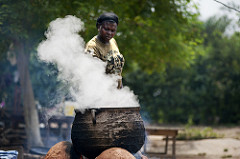
Post-hoc quality assessment and annual summary report services for the World Food Programme
The United Nations World Food Programme (WFP) is the world’s largest humanitarian agency, providing food assistance to...

Introducing The Mastercard Foundation Savings Learning Lab
The Mastercard Foundation Savings Learning Lab is a six-year initiative implemented by Itad, in partnership with the SEEP...

V4C Case Study – Religious leaders speak up for gender equality
This V4C case study examines the programme's work with religious leaders and institutions.

V4C Case Study – Traditional leaders advocate for female decision makers
This V4C case study examines the role of traditional leaders in promoting positive attitudes towards women and girls.

V4C Case Study – Radio station staff start to believe in gender equality
This V4C case study brief explores the influence that V4C’s support has had on a sample of the targeted radio stations based...

V4C Case Study – Strengthening mechanisms that support gender responsive legislation
This V4C case study explores the revived 'Gender Technical Unit' and it's engagement with the Nigeria National Assembly.

Summary Paper: Retrospective Impact Assessment 2005-2015, Financial Sector Deepening Trust Tanzania
During 2016, Itad, in association with MicroSave, undertook an impact assessment of Financial Sector Deepening Trust...

Final Report: Retrospective Impact Assessment 2005-2015, Financial Sector Deepening Trust Tanzania
During 2016, Itad, in association with MicroSave, undertook an impact assessment of FSDT’s programme of work from 2005 to 2015.

Impact Evaluation of the Samarth Market Development Programme in Nepal
Despite economic growth, remittances from abroad and significant donor support, poverty and inequality remain high in Nepal,...

External assessment of value for money, sustainability and coordination of DFID’s funding to the UNFPA-UNICEF Joint Programme to end FGM
External assessment of value for money, sustainability and coordination of DFID’s funding to the UNFPA-UNICEF Joint...
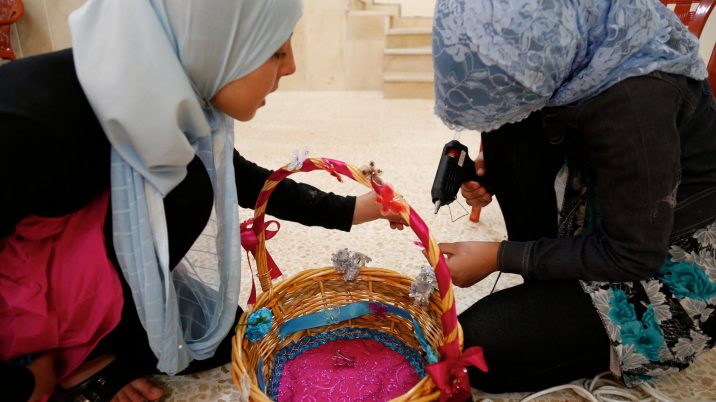
Evaluation of UNFPA Support to the Prevention, Response to and Elimination of Gender-based Violence, including Harmful Practices
The issue of violence against women and girls features strongly in the 2030 Development Agenda. We are committed to supporting...
Evaluation is crucial to reaching the FP2020 goals
The Health Theme in Itad has been thinking about what evaluation means to them in the family planning arena.
New household data from Ghana project available for re-analysis
Are you looking for an interesting research project where you can undertake your own analysis of existing datasets?
New BEAM Exchange platform
New BEAM Exchange platform launched for practitioners to share stories of challenges to MRM on programmes applying a market...
