
Capacity building in evidence use
Strengthening teams to design, commission, interpret and use evidence in real world decision-making.
We bring lessons from evaluating training and capacity building efforts into our own approach. We work on the principle that accompanying change – rather than imposing change – delivers sustainable results. We have worked with clients of all shapes and sizes to support their training and capacity building needs in line with their organisational culture.
See examples of our work below, and use the filters to explore specific content.

Executive Summary: External Review of Enabling the Business of Agriculture
The ultimate goal of Enabling the Business of Agriculture (EBA) is to provide governments with clearly defined good practices...
No time to wait: evaluating the fight against ‘Drugmageddon’
This week, the UK’s Chief Medical Officer, Sally Davies, called for an Extinction Rebellion-style campaign to raise...

Reflections on decentralised climate finance from CBA13
I recently witnessed the potential of a funding mechanism that allows indigenous people and local communities to determine how...
Is open access worth it? Maybe not yet, but we should still do it!
During the impact evaluation of the Millennium Villages project in northern Ghana, we opened up our datasets for wider...
Linking mine action to development: the need for generating evidence of longer-term change
With the annual UN International Mine Awareness Day on April 4, Jason Collodi and Tom Gillhespy from Itad’s Fragile and...

GPE 2020 country-level prospective evaluation – Nepal
The purpose of this prospective evaluation is to assess whether GPE’s inputs and influence in Nepal are orienting education...

GPE 2020 country-level prospective evaluation – Nigeria
This is the first of two annual reports to be submitted during the three-year prospective evaluation of the Global Partnership...

Why funders need to practice adaptive portfolio management to support systems change
Much like traditional investors, development funders often manage portfolios of investments. But what does it mean to manage a...
First GPE 2020 country-level prospective evaluation reports published
The first set of annual country reports for our prospective evaluation of the Global Partnership for Education (GPE) have been...

Portfolio evaluation of advocates working in the global health research and development space
Research and development for global health is a broad sphere of activities that addresses some of the most neglected areas of...
Podcast: Learning from evaluating HCD field work
Itad's Stefanie Wallach joined Tiffany Franke on the Adolescents Insights group podcast series (made for the HCD Exchange)...
60 seconds with…Fergal Turner
Our ‘60 Seconds with…’ blogs are designed to provide a quick run down of what our staff do here at Itad. Here is what...
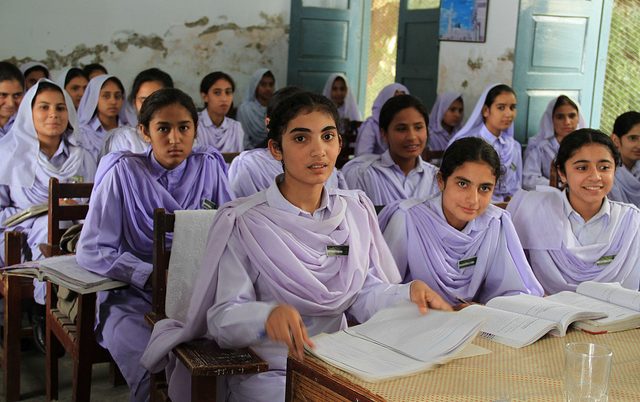
Technical Review of Learning Targets Approach for Highly Marginalised Girls
The Girls’ Education Challenge (GEC) was launched by the UK in 2012 as a 12-year commitment to reach the most marginalised...

New lessons from Mastercard Foundation Savings Learning Lab partners
Partners from the Mastercard Foundation Savings Learning Lab have recently shared lessons from their work in financial...

Strategic Evaluation of WFP Support for Enhanced Resilience
Itad's strategic evaluation provides a formative and forward-looking assessment of WFP’s support for enhanced resilience....
Itad to discuss Global Mine Action Programme evaluation
Itad’s Tom Gillhespy will be at the 22nd International Meeting of Mine Action National Directors and United Nations Advisers...
