
Capacity building in evidence use
Strengthening teams to design, commission, interpret and use evidence in real world decision-making.
We bring lessons from evaluating training and capacity building efforts into our own approach. We work on the principle that accompanying change – rather than imposing change – delivers sustainable results. We have worked with clients of all shapes and sizes to support their training and capacity building needs in line with their organisational culture.
See examples of our work below, and use the filters to explore specific content.

Making the case for overseas development assistance in a changing world
In a world marked by rising uncertainty, volatility, and global interdependence, development has a more important strategic...

Equitable innovation through strategic research collaboration
We assessed the effectiveness of the Gates Foundation and the UK Government’s Agricultural Research Partnership in Africa...

Impact Study of Healthy Village Programme Ethiopia
Itad is leading a consortium with IDS, MMA and Stats4SD to help Plan International design the impact study of their Healthy...

How to optimise global health initiatives
Rethinking the global health ecosystem to achieve universal health coverage - lessons from our evaluation of the Future of...
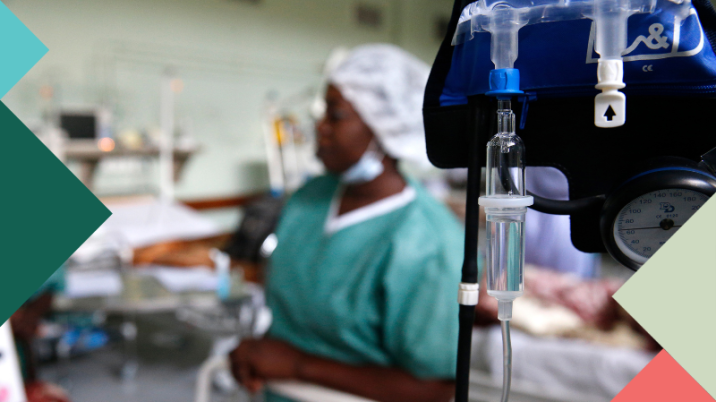
Evaluation of Future of Global Health Initiatives process
We assessed the Future of Global Health Initiatives process to generate learning and reflection needed to reinvigorate the...

Join us at the UK Evaluation Society Conference 2025
This year’s UK Evaluation Society (UKES) Conference takes place on 19-22 May 2025 online and in Glasgow. We’ll be there,...
Evaluation of the Future of Global Health Initiatives process
The Future of Global Health Initiatives (FGHI) process aimed to improve how the global health financing ecosystem and Global...

Evaluating UNICEF’s Accountability to Affected Populations
We assessed how well the organisation has integrated Accountability to Affected Populations (AAP) commitments and practices...

Applying a power lens to improve accountability and action for women’s rights
Ahead of International Women’s Day 2025, we share insights on the linkages between power and accountability, and effective...

Leveraging funder collaboration to accelerate action for gender equality
Collaboration amongst funders has emerged as a powerful tool to advance gender equality. To mark International Women’s Day...
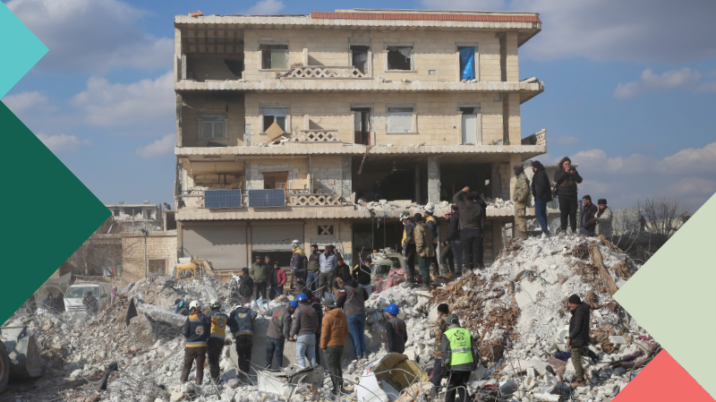
Evaluating the collective response to Earthquakes in Türkiye and Syria
Itad is using a highly participatory approach to examine the Inter Agency Standing Committee’s response to the earthquakes...

Protecting oceans and securing futures for coastal communities
We are strengthening the delivery of the UK Government's international efforts to protect the marine environment and reduce...
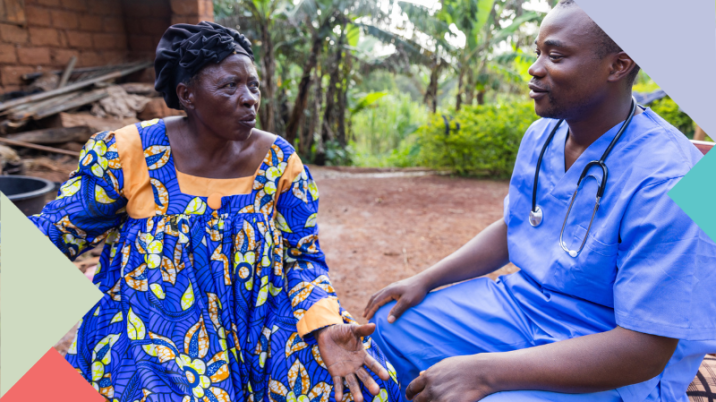
Strengthening efforts to tackle deadly diseases in Africa
We are providing monitoring, evaluation and learning support the UK Government’s global health security programming. We aim...

Private Capital Mobilisation: Concepts and Definitions
By establishing a common vocabulary this publication aims to support a more coordinated approach by Development Finance...

Using bricolage for impactful evaluations
Bricolage is a vital practice in the field of evaluation. Here we summarise what it is and why it's important together with...

How do we evaluate AI in public policy?
What are the evaluation implications of artificial intelligence use in public policy and programming?
