
Learning events are everywhere. Yet too many remain information-sharing exercises rather than engines of learning and adaptation. Across programmes, partnerships and initiatives tackling complex social, environmental and governance challenges, significant time and resources are invested in bringing people together. But when participants leave the room, the conversations do not always translate into changed thinking, decisions or action.
At a time when organisations are expected to adapt quickly to emerging evidence and changing contexts, that represents a missed opportunity. The most effective learning events are deliberately designed to help people reflect, connect, challenge assumptions and identify practical ways forward. The events that make a difference look different. They are designed and facilitated so that people leave with new relationships, sharper insight into what is contributing to success, and a clear sense of what to do next.
This difference comes down to deliberate design choices and skilled facilitation. The first Annual Learning Forum (ALF) of the ASEAN-UK Health Security Partnership (HSP) offers a useful example of what this looks like in practice.
The Annual Learning Forum in brief
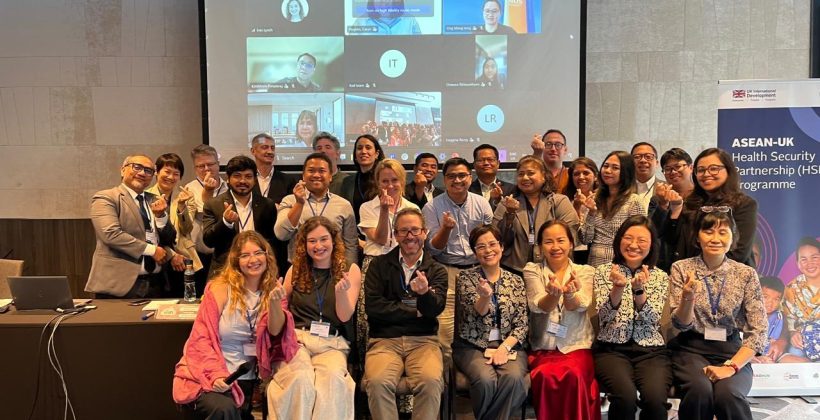
In May 2026, Itad convened and facilitated the HSP’s inaugural ALF over three days in Bangkok. Bringing together grantees, programme partners, funders and regional stakeholders, the forum was designed to support adaptive management, knowledge sharing and accountability across the programme.
Representatives attended from the UK Government’s Foreign, Commonwealth & Development Office (FCDO), the ASEAN Secretariat, the delivery consortium (FHI & The Pandemic Institute), grantees and Quadripartite partners including the Food and Agriculture Organization (FAO), the World Health Organization (WHO), the World Organisation for Animal Health (WOAH) and the United Nations Environment Programme (UNEP).
For many participants, it was their first opportunity to engage with the wider HSP community. The forum’s purpose was simple: create a space to reflect on progress, share experiences, and identify actions for the year ahead.
Five design choices that made the difference
Our experience across various initatives together with feedback from ALF participants, points to a consistent set of principles that distinguish a genuine learning space from an information-sharing exercise.
1. Start with the questions that matter
Rather than developing the agenda in isolation, the ALF was co-designed with the ASEAN Secretariat, FCDO and programme partners. Together, we identified the questions that the programme community most wanted to explore. This helped ensure the forum responded to real challenges and opportunities rather than assumptions about what participants needed. We know from experience, that when people recognise their own questions reflected in the agenda, they are far more likely to engage meaningfully in the discussion.
2. Design for connection
Learning travels through relationships. The forum brought together grantees, regional stakeholders and programme partners who might otherwise have had little opportunity to interact. But connection doesn’t happen just because the right people are in the room; we designed for it. Breakout groups deliberately mixed grantees with funders and delivery partners rather than letting familiar colleagues cluster together.
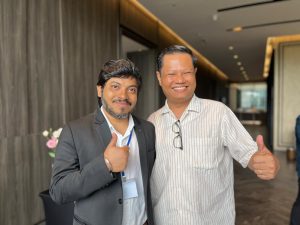 A World Café format rotated every group through every table, so no one left without having spoken to people beyond their usual circle. And interactive tools drew contributions from the whole room, not just the confident few. Participants consistently told us that networking and learning from one another were among the most valuable aspects of the forum. These connections create pathways through which ideas and lessons continue to flow long after an event ends.
3. Create permission to discuss failure
Adaptive management depends on honest reflection, and honest reflection needs a foundation of trust. Yet many programmes struggle to create environments where participants feel comfortable discussing challenges as openly as successes.
At the ALF, we built that permission deliberately. We opened by setting out working principles of curiosity, reflection and shared learning with participants, to establish a space in which people could share openly and without judgement. Sessions were structured to encourage participants to discuss obstacles, uncertainties and lessons learned – as well as successes.
As facilitators, we created discussion prompts that asked directly about obstacles and uncertainties, making it clear that raising challenges was the point of the session, not a risk taken within it. In one discussion, grantees who were new to FCDO funding compared experiences of programme inception and onboarding. One participant reflected that it was reassuring to discover others faced similar challenges and that the ALF created a space where they felt comfortable talking directly with the funder about them.
4. Prioritise dialogue over presentations
Many learning events are dominated by presentations. While sharing information has its place, presentations alone rarely create the conditions for new insight to emerge. At the ALF, presentations were kept concise and designed to stimulate discussion rather than replace it. The sessions participants valued most were the interactive ones.
A World Café enabled all participants to contribute ideas, explore different perspectives and collectively identify emerging themes. Grantees shared their work through a poster gallery rather than a series of presentations, prompting one-to-one conversations and small-group exchange that a plenary format would not have allowed. And rather than presenting the programme’s theory of change back to the room, we asked participants to test and revalidate it together. These sessions generated richer discussion and surfaced insights that would have been difficult to capture through traditional presentations alone.
This extended to the agenda itself. When early discussions surfaced a clear appetite for stronger connections between the delivery programme, grantees and FCDO teams based in country, we reworked that day’s session on communication and engagement to respond to it directly, rather than delivering the session as originally planned.
5. Capture insights and act on them
Learning events create value only when what is learned influences what happens next. Throughout the forum, insights were captured by Itad’s Learning team through interactive breakout discussions and activities, as well as through Miro for virtual attendees, and then were synthesised and reflected back to participants by the Learning team facilitators. Rather than treating learning as a standalone activity, HSP is using these findings to inform future planning, identify learning priorities and strengthen collaboration across the portfolio.
So, what did the forum deliver?
Participant feedback following the ALF was overwhelmingly positive. Every respondent agreed that the content was useful to their work, while facilitation was the highest rated aspect of the event. But, the most telling feedback was not about any individual session. Participants most frequently highlighted the relationships they built, what they learned about other projects across the portfolio, and the chance to exchange experiences with peers facing similar challenges.
These outcomes matter because they create the conditions for learning to influence practice. When grantees understand each other’s work, good ideas travel more quickly. When implementers, funders and policymakers develop stronger relationships, evidence has a clearer route into decision-making. And when a programme community reflects together on what is contributing to outcomes, it becomes better equipped to adapt and improve.
The forum’s insights are already informing the programme’s learning priorities and planning for the next phase of delivery.
Designing spaces where learning leads to action
A learning forum is not valuable because people talk to one another. It is valuable because well-designed, well-facilitated conversations help programme make better decisions. We are holding ourselves to that standard too, listening to participant feedback on pacing, grantee-led space and the online experience is already shaping the next ALF.
For anyone planning a learning event of their own, three questions to consider when planning: Who needs to be in the room for insights to reach decisions? What will create the conditions for people to share openly about what is and is not working? And what happens to what you hear once everyone goes home?
Answering these questions well takes deliberate design and skilled facilitation, and that is where Itad comes in. We work with clients across a wide range of sectors and contexts – through annual forums like the ALF to workshops, to learning partnerships, co-creation processes and adaptive management approaches that help evidence and experience translate into action.
If you are thinking about how to build genuine learning into your programme, explore our learning services and facilitation & co-creation processes, or get in touch.
