
For organisations working for social change, evidence matters. Yet even the strongest evidence can struggle to connect decision makers to how change is actually experienced on the ground.
In complex and uncertain contexts, decisions are shaped not by data alone, but by interpretation, judgement and trust. Stories of change play a critical role here, not by replacing evidence, but by complementing it with structured, evidence‑informed narratives that make sense of how change unfolds.
At Itad, stories of change are not an add‑on or communications product. They are a part of an evaluator’s toolkit, developed alongside evaluation findings and linked explicitly to theories of change, evaluation questions and decision needs. By connecting evidence to lived experience, they help decision makers engage critically with findings and use them well.
Why human connection matters in evidence use
Evaluation findings can show whether outcomes are being achieved and where progress is uneven. But they often struggle to answer questions that are inherently human-centred, such as:
- How does this change feel for different people?
- Why do some groups benefit more than others?
- What does progress look like when lived day to day, rather than in aggregated results?
- How do power, relationships and social norms shape outcomes.
Without connection to lived experience, evidence risks remaining abstract. Stories of change help bridge this gap, transforming evidence from something that is read into something that is felt and understood, enabling decision makers to engage both analytically and empathetically.
Human connection as part of the evaluator’s toolkit
For Itad’s clients, this means stories of change are used deliberately as part of the evaluator’s toolkit to support learning and decision making. In practice, they help to:
- Enable reflection and dialogue among stakeholders
- Bring overlooked or marginalised perspectives into interpretation of evidence
- Build shared understanding across diverse actors
- Support sense‑making in complex or sensitive reform contexts
Used in this way, our stories of change do not stand alone. They complement and enrich other evaluation findings, particularly where change involves power, behaviour or systems rather than discrete service delivery outcomes.
Beyond “impact stories” as communications products
Impact stories are often treated as communications outputs; short narratives designed to showcase success and inspire support. For evaluators and funders alike, this can raise legitimate concerns about selectivity, bias and over‑simplification.
Stories of change, as used by Itad, serve a different purpose. They are not advocacy tools nor substitutes for analysis. Instead, they are evidence‑based narratives that focus on a specific change and trace how it came about.
By placing people and relationships at the centre of analysis, stories of change help interpret data without diluting rigour. The key question shifts from “Is this a compelling story?” to “What does this story tell us about how change happens – and what should we do next?”
What distinguishes Itad’s approach
At Itad, stories of change are designed to be:
- Analytically robust, grounded in evaluation frameworks and verified evidence
- Human‑centred, giving voice to experience while respecting consent and dignity
- Learning‑oriented, supporting reflection, adaptation and strategic choice
- Multi‑level, connecting individual journeys to organisational and system change
Taken together, these features ensure stories of change function as analytical tools rather than illustrative anecdotes, strengthening the credibility and usefulness of evaluation.
From findings to meaning: two recent examples
Making inclusion and growth human
Sekina Hassen’s story, produced alongside Itad’s independent mid‑term review of Inkomoko’s Refugee Livelihoods Programme, illustrates how stories of change bring evaluation findings to life.
While the review assessed progress and emerging outcomes across the programme, Sekina’s story was selected to illuminate how the programme is changing real lives and what more can be done to enable refugee‑led enterprise development in constrained environments.
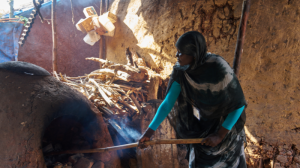 Sekina’s journey — from sustaining a small bakery under severe constraints to expanding production and employing others — shows how coordinated support, enabling environments and access to opportunity translate into economic participation and resilience.
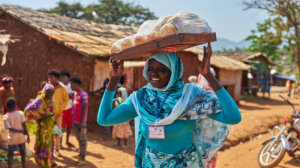 Her story gives practical substance to concepts such as inclusive growth, helping partners understand not just that change is happening, but how it happens and what enables or constrains it.
Revealing the human pathways of empowerment
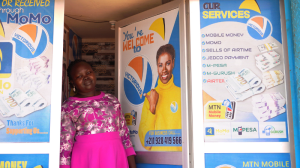
Rosemary’s story highlights dimensions of change that matter deeply to people but are often difficult to capture through evaluation reports alone. The reader follows her journey from street vendor to Managing Director of a registered mobile money company in one of the world’s most fragile financial systems.
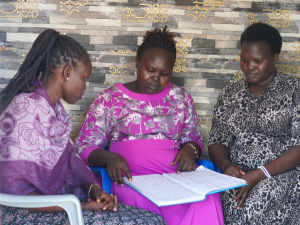 While evaluation data may show improvements in income or participation, Rosemary’s story traces changes in confidence, decision‑making power, and the ripple effects within her community and business networks. By revealing moments of uncertainty, resilience and adaptation, the story supports more nuanced judgement about what it takes to support genuine empowerment – and where greater attention to societal and relational factors is needed.
Bringing evidence and empathy together
At Itad, we are finding that organisations need more than evidence alone. They need to understand how change is lived, negotiated and sustained by people, and how strategies interact with contextual realities.
When embedded within rigorous evaluation, stories of change bring evidence and empathy into closer dialogue. They help decision makers move from findings to meaning, connecting data with dignity, strategy with experience, and intention with reality. Stories of change do not replace evidence — they help ensure it is understood, questioned and ultimately used to make better decisions.
If you are planning an evaluation, review or learning process and want evidence that connects with lived experience, get in touch to explore how we could work together.
Image credits: Sekina’s story photos by Qene films. Rosemary’s story photos by Frank Juma.
